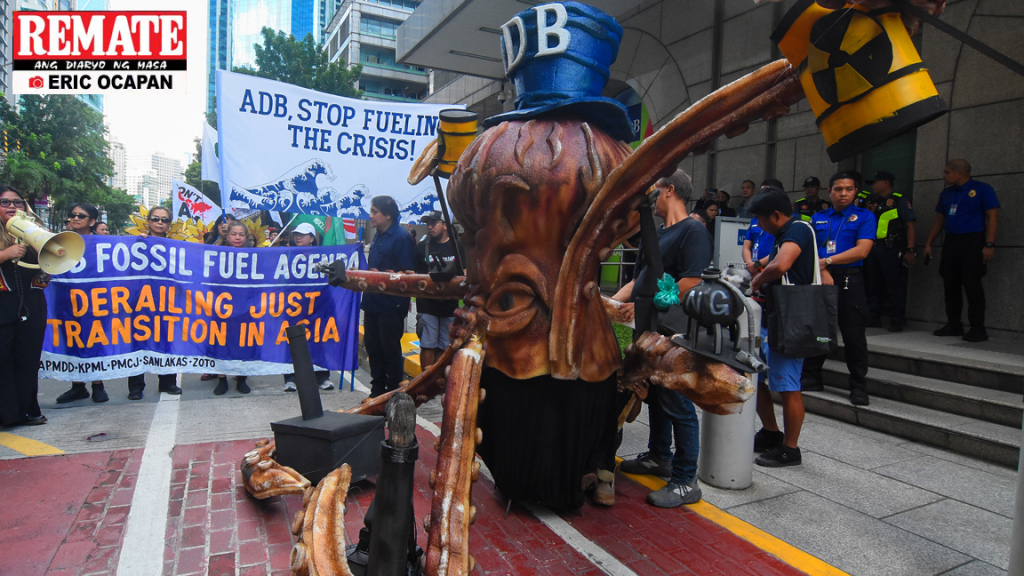
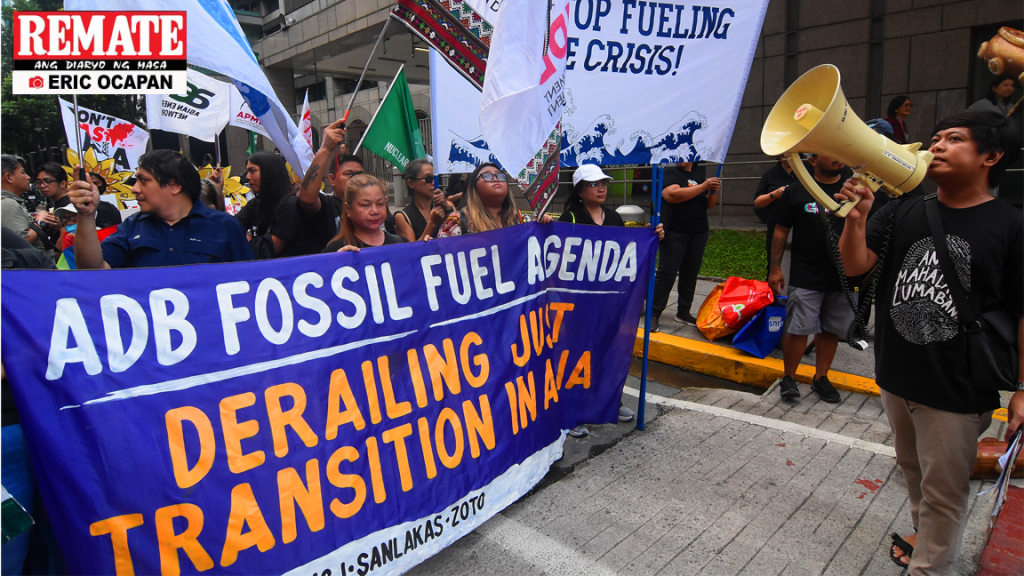
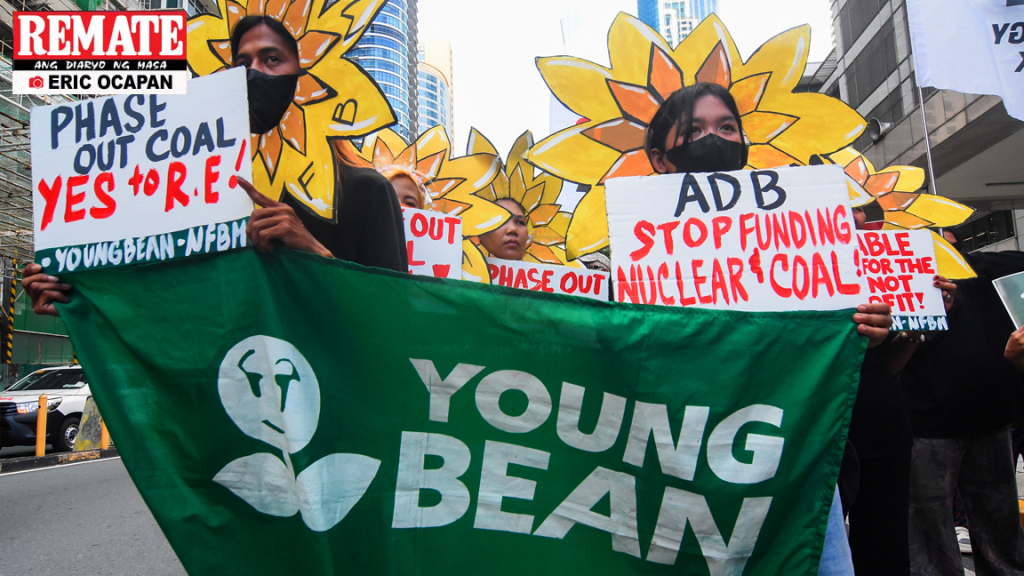
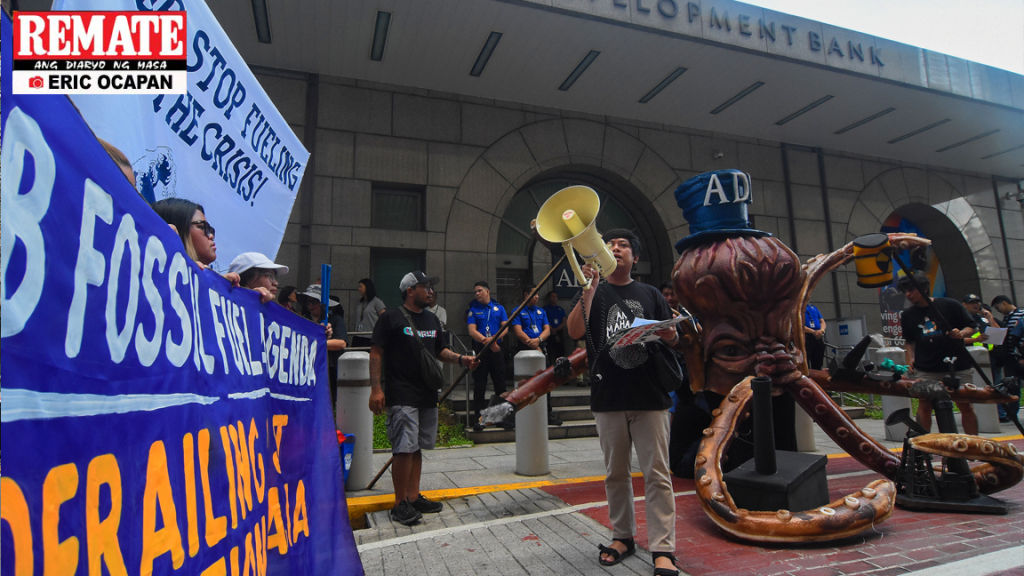
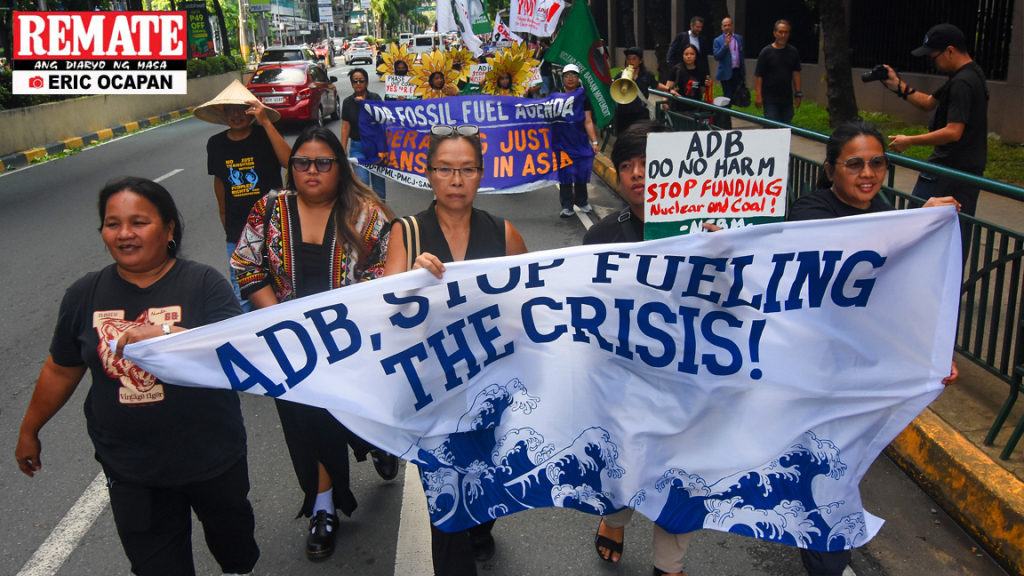
MANILA, Philippines – Nagsagawa ng malikhaing protesta ang mga civil society organizations na pinangunahan ng NGO Forum on ADB sa 21st Asia Clean Energy Forum (ACEF 2026) sa Mandaluyong City.
Ipinakita nila ang isang malaking “Kraken of Destruction” upang batikusin ang umano’y papel ng Asian Development Bank (ADB) sa pagpapalala ng global energy crisis dahil sa patuloy na financing sa fossil fuels at iba pang “false climate solutions.”
Sa labas ng venue sa headquarters ng Asian Development Bank, kinatawan ng kraken ang tinawag nilang “system of energy capture,” kung saan ang mga galamay ay sumisimbolo sa fossil fuels, pagmimina, waste-to-energy incineration, nuclear energy, at kontrol ng ADB sa energy systems.
Ayon kay Elle Bartolome ng Philippine Movement for Climate Justice, matagal nang nakadagdag ang ADB sa krisis sa enerhiya sa Asia sa pamamagitan ng fossil fuel financing. Binanggit niya ang mga komunidad sa Cebu na matagal nang naghihintay ng hustisya dahil sa coal projects, at mga pamilyang apektado sa Zambales.
“This ACEF, it’s time to name the monster. For more than sixty years, the ADB has trapped communities in a dirty legacy of destructive business across Asia. The imperialist wars only exposed what was already there: an energy crisis structurally built, loan by loan, by the Bank itself through decades of fossil fuel financing,” aniya.
“The Philippines is a testament to that. In Cebu, coal communities have spent nearly 15 years seeking justice that has remained elusive to this day. In Zambales, families live in the shadow of a coal infrastructure that ADB helped build, and now faces expansion. How many more communities have to watch their homes destroyed, their health at risk, and their very survival threatened before ADB is held accountable?” dagdag niya.
Ipinunto rin ng NGO Forum na sa gitna ng global energy crisis at mataas na presyo ng kuryente, patuloy umano ang ADB sa pagpapalawak ng fossil fuel-related financing, kabilang ang oil import transactions sa ilalim ng Trade and Supply Chain Finance Program.
“In the time of a global energy crisis, overwhelming forces such as the surge in electricity prices and basic commodities are carried largely by the public. The indirect impacts of the war in West Asia reveal how Asia, heavily dependent on fossil fuels, has struggled to battle with both volatile markets and the worsening effects of the climate crisis. Now, ADB is capitalizing on this crisis to push its fossil fuel agenda as so-called ‘emergency financing’, including the revival of oil imports under its Trade and Supply Chain Finance Program. This institution must stop packaging fossil fuel finance as a crisis response,” ayon kay Nazareth Del Pillar of NGO Forum.
Giit ng mga grupo, ang mga komunidad sa Asia ang patuloy na nagdurusa sa tumataas na gastos sa enerhiya, utang ng gobyerno, at epekto ng climate change, habang ang malalaking proyekto ay nakasentro pa rin sa interes ng korporasyon kaysa sa publiko.
“The ADB continues to undermine a just energy transition in Asia by keeping pathways open for continued oil and gas expansion, preserving coal loopholes, and promoting false energy solutions. At a time of worsening climate and debt crises, the ADB must stop locking countries into costly and polluting energy systems that delay the shift to clean, renewable energy. Real energy security requires accelerating a rapid, equitable, and people-centered transition powered by renewable energy,” ani Lidy Nacpil ng Asian Peoples’ Movement on Debt and Development (APMDD).
“ADB’s debt-driven climate financing undermines the very essence of climate justice. A truly just transition must move away from fossil fuel dependence and debt-based lending, and instead support public financing that enables clean, affordable, and democratic renewable energy systems that serve people and communities.” dagdag niya.
Nagbabala rin ang Alyansa Tigil Mina laban sa posibleng pinsala ng mas malawak na pagmimina ng “transition minerals” tulad ng nickel at copper, na maaaring magdulot ng bagong environmental at social problems.
“ADB is treading on a slippery slope if and when it proceeds in providing funds for more mining of nickel, copper and other transition minerals in the region. ADB risks creating more suffering against mining-affected communities. Opening up sacrifice zones to deliver minerals that may or may not actually go towards renewable energy technologies, but instead to security and defense requirements of developed countries, is not the direction of clean energy development that ADB is aspiring for.”
Pinuna rin ng mga grupo ang ADB Energy Policy Review 2025 na umano’y patuloy na tumitingin sa fossil gas bilang “transition fuel” at nagbubukas din sa nuclear energy, carbon capture, at malawakang pagmimina.
“ADB’s current push for private sector investments comes with non-transparent financing modalities that hide all manner of evils. By partnering with private sector companies that hold poor human rights records or refuse to phase out fossil fuels, the Bank is putting people and the planet at risk. ACEF must not be a platform for normalising collaboration with companies that are actively fuelling the energy and climate crises. The ADB must keep its development mandate at heart when choosing private sector partners, ensuring it banks on renewables, upholds safeguards, and puts people’s needs first,” ayon kay Marjorie Pamintuan, Advisor at Recourse.
Nanawagan ang Forum Network at mga kasamang grupo na dapat ipatupad ng Asian Development Bank ang mga sumusunod na “non-negotiables”:
–Itigil ang lahat ng direktang at hindi direktang pagpopondo sa fossil fuels
–Tanggihan ang pagpopondo sa nuclear energy
–Itigil ang suporta sa tinatawag na “false solutions” tulad ng waste-to-energy incinerators at malalaking proyekto
–Bawal ang extractive mining kung walang malinaw na safeguards at pahintulot ng mga katutubo (indigenous consent)
–Bigyang-priyoridad ang publiko at community-led na renewable energy systems kaysa sa mga modelong kontrolado ng pribadong sektor
“ADB cannot claim to build secure, inclusive, and sustainable energy systems while its financing arms continue feeding the very kraken that is strangling Asia’s communities. From fossil gas and opaque oil trade finance to nuclear energy, waste-to-energy incineration, critical minerals extraction, and private-sector deals that socialize risks while privatizing profits, the Bank is not resolving the energy crisis—it is deepening and restructuring it for corporate gain,” saad ni Rayyan Hassan of NGO Forum on ADB.
Idinagdag niya na “for communities already burdened by debt, displacement, toxic pollution, rising electricity costs, and climate devastation, this is not a just energy transition. This is energy capture. ADB must sever every tentacle of fossil fuel dependence and false solutions, close all direct and indirect financing loopholes, and place public, democratic, and community-led renewable energy systems at the center of Asia’s future.”
Sa huli, nanawagan ang mga organisasyon na itigil ang fossil fuel financing, tanggihan ang nuclear energy, itigil ang “false solutions,” at unahin ang publicly funded at community-led renewable energy systems para sa makatarungang energy transition sa Asia. RNT