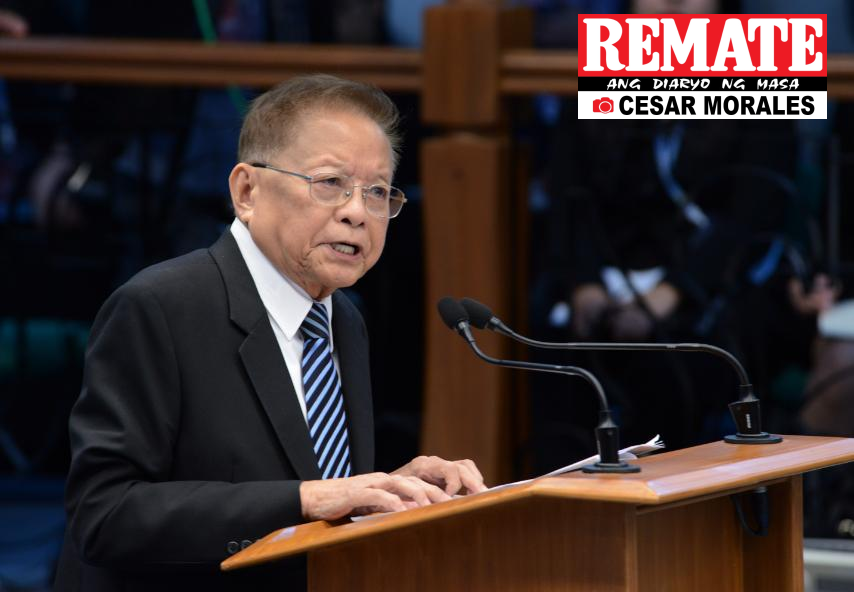
MANILA, Philippines – Inihayag ni dating Supreme Court Chief Justice Reynato Puno nitong Miyerkoles na flexible ang probisyon ng 1987 Constitution sa bilang ng boto na kailangan upang ma-convict ang isang impeachable officer, “depending on certain factors.”
Nagpahayag si Puno, na tumatayong amicus curiae o friend of the court, ng kanyang pananaw sa Senate impeachment court habang nirerebyu kung dapat bang panatilihin ang 16-vote requirement upang ma-convict si Vice President Sara Duterte, sa kabila ng tatlong absent na senator-judge.
Kabilang sa hindi nakadadalo sa impeachment court sina Senador Jinggoy Estrada at Rodante Marcoleta na kapwa nakalulong sa kasong plunder, Gayundin si Senador Ronald ‘Bato” Dela Rosa na pawang nagtatago sa warrant of arrest na ipinalabas ng International Criminal Court (ICC). Di pa umuuwi si Senador Loren Legarda na nagsasabing nagpapagamot sa France.
“It is inappropriate to give Article 11, Section 3-6 of the Constitution a standalone literal reading. If we give this kind of reading to Article 11, Section 3-6, the threshold of 16 senators to convict will be fixed and immutable,” diin ni Puno.
Sinagot ni Puno ang tanong ng korte kung ang pariralang “all members of the Senate” sa Article 11, Section 3, Paragraph 6 ng Konstitusyon ay dapat bang tumukoy sa buong miyembro ng Senado na 24 na senador.
“However, if that is the intent, Article 11, Section 3-6 should have simply stated that the number of votes to convict is 16. But Article 11, Section 3-6 did not say so. Instead, the language used a fraction,” sabi niya sa mga senator-judge.
“It says two-thirds of all members of the Senate. By using two-thirds, the number of votes to convict will have to move, depending on certain factors,” deklarasyon niya.
Binigyang-diin pa ni Puno na ang “strict, standalone, literal interpretation ng probisyon ay maaaring “result in absurdities and may result in injustices, which will defeat the purpose of the Constitution.”
Sa pag-interpret ng Konstitusyon nang contextual at functional, sinabi ni Puno na binibigyan ang mga senador ng “flexibility to consider circumstances that will legally prevent a senator from functioning as a member of the Senate.”
“This approach will give the senators the right to consider whether senators who are already dead, resigned, or expelled should still be counted in determining two-thirds of all the members of the Senate,” aniya.
“Also, this approach will enable senators to consider whether senators who are legally incapacitated, like senators charged with plunder, like senators under preventive suspension, should still be counted in determining the number of votes to convict,” paliwanag ng dating chief magistrate.
Sa pagtukoy kung dapat bang makaboto ang mga senador na hindi gaanong nakalahok sa impeachment proceedings, hinimok ni Puno ang korte na isaalang-alang na ang mga hukom sa Regional Trial Courts (RTC), Court of Appeals, at Supreme Court ay pinapayagang magdesisyon batay sa testimonya ng mga testigo na na-transcribe sa stenographic notes.
Nagbigay ng halimbawa ang dating chief justice: “To determine the facts of a case, a judge need not personally see the demeanor of a witness, although that is ideal.”
“Thus, an RTC judge who succeeds another RTC judge can decide cases left by the latter, even if the succeeding judge did not personally hear some of the witnesses who have previously testified,” sabi ni Puno sa korte.
Bukod dito, paulit-ulit na binigyang-diin ng dating chief magistrate ang pangangailangan na litisin ang mga respondent ng independent, fair at impartial courts. Hindi lamang ang 1987 Constitution ang kanyang binanggit, kundi pati ang Universal Declaration of Human Rights at ang International Covenant on Civil and Political Rights — mga international resolution na nilagdaan at niratipikahan ng Pilipinas.
“To allow a member senator, to try and decide an impeachment case, who is not fair and impartial, to subject a respondent in an impeachment case, to allow him to be tried and judged by a tribunal who is not independent or by a tribunal who is biased and prejudiced – will have far-reaching consequences,” pahayag ng retiradong chief justice. Ernie Reyes