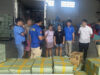
THERE’S a standing policy that makes sure that no family or individual is left behind during disasters and other types of emergencies, an official of the Department of Social Welfare and Development’s Disaster Response and Management Group said.
Assistant Secretary Irene Dumlao has stressed that the agency’s social workers remain non-selective in providing immediate assistance to families affected by disasters or emergencies, whether they stay in evacuation centers or not.
“Hindi lamang po sa evacuation centers. In fact, dinadala rin po natin doon sa mga displaced populations but are outside evacuation centers kasi may mga naninirahan pa rin or nanunuluyan pa rin po sa kanilang mga tahanan o doon sa mga tahanan ng kanilang mga kaibigan o kaanak.”
“DSWD monitors in coordination with the local government units, all disaster-affected populations para po mabahaginan po ng tulong,” the DSWD spokesperson said.
She cited the DSWD’s efforts of becoming omnipresent in its disaster preparedness and response operations through the ‘Buong Bansa Handa’ program.
“Isa po sa direktiba ni Pangulong Ferdinand R. Marcos Jr. sa DSWD ay tiyakin yung kaligtasan at kapanatagan ng kalooban ng mga kababayan natin na madalas maapektuhan ng mga iba’t ibang mga disasters. Iyan ay sa pagtitiyak na maayos, mabilis, at sapat ang mga tulong na ipinaabot natin kapag ganitong may kalamidad na kinakaharap ang ating bansa,” she told the Good Riddance.
The BBH Program employs two complementary supply chain systems to strengthen the DSWD’s disaster preparedness and response efforts.
The first is a government-led supply chain that focuses on enhancing the production capacities and operational processes of the agency’s National Resource Operations Center in Pasay City, the Visayas Disaster Resource Center in Cebu, and the various warehouses and storage facilities located in all DSWD Field Offices.
For the second supply chain, Dumlao explained that the DSWD has partnered with large and small groceries, supermarkets, manufacturers, and distributors via framework agreements to tap into their technical expertise and resources, thereby establishing a private sector-led supply chain.
Currently, the DSWD maintains more than 3 million family food packs strategically prepositioned at various hubs, spokes, and last-mile facilities across the country.