President Ferdinand R. Marcos Jr.’s sustained implementation of the Bangsamoro peace agreements, from amnesty and normalization of former Moro combatants to strengthening BARMM autonomy and preparing for its first regular parliamentary elections, has helped pave the way for the Moro Islamic Liberation Front (MILF) to complete its historic transition from armed struggle to democratic political participation.
Various initiatives by the Administration are now converging with the political track of the peace process as BARMM prepares to hold its first regular parliamentary elections on Monday September 14 or 50 years after the signing of the historic Tripoli Agreement.
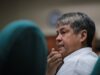
Datu Michael O. Mastura, a former senior member of the MILF panel in peace negotiations with the government, welcomed and lauded the MILF’s participation in the historic parliamentary elections.
“The important thing is that they (MILF) are seeking legitimacy. So, let us welcome them to the electoral process,” Mastura said in an interview.
“They have to know how to transition from an armed conflict group to a party seeking seats in a parliament, in a voting-rights way,” said Mastura, a former deputy minister for the Office of Muslim Affairs.
“I am very happy that they have accepted it. Finally, we have the go-signal on Monday, Sept. 14,” said Mastura, who also served as a delegate to the 1971 Constitutional Convention.
Mastura said the significance of the BARMM elections goes beyond institutionalizing a parliament and ushering in new political leadership in the autonomous region.
“We should use these (BARMM elections) as a reform movement. We are moving into a system that will discourage one-man rule. In exchange, we have the assembly or parliament. We would like to see a strong bureaucracy, coupled with a strong party system,” the Muslim scholar said.
“We have 13 parties vying for seats in the parliament. That is a good sign that we are finally realizing that a party system can work,” said Mastura, who represented Maguindanao and Cotabato City in Congress from 1987 to 1995.
“Voting will be done to select parties that will have seats in the parliament. The more seats you have, the more you will be qualified to form the government of the day. I think the way is a coalition government,” Mastura added.
The September 14 elections represent a major milestone in a peace process spanning half a century of negotiations, armed conflict, political upheavals and constitutional challenges in the search for a peaceful settlement of the Moro struggle.
The Tripoli Agreement was signed on December 23, 1976, during the administration of then-President Ferdinand E. Marcos Sr., with Libya and the Organization of Islamic Cooperation helping facilitate negotiations between the Philippine government and the MNLF.
The process subsequently led to the 1996 Final Peace Agreement between the government and the MNLF during the administration of President Fidel V. Ramos, while separate negotiations with the MILF culminated in the Comprehensive Agreement on the Bangsamoro in 2014 and eventually the establishment of BARMM.
Under the administration of President Marcos Jr., the national government has sought to advance both the political and normalization tracks of the Bangsamoro peace process, including the transition of the MILF from a revolutionary organization into an active participant in parliamentary democracy.
President Marcos has also ordered security and law enforcement agencies to ensure that the September 14 elections are peaceful, orderly, free and credible, while authorizing the deputation of the Armed Forces of the Philippines, Philippine National Police and other government agencies to assist the Commission on Elections.
The President also declared September 14 a special non-working day throughout BARMM to give Bangsamoro voters the opportunity to fully participate in the historic electoral exercise.
During the opening of the 2026 National Peace Consciousness Month, President Marcos underscored that the election represents another opportunity to consolidate decades of peace gains through democratic institutions.
“Let this election show that the future of the Bangsamoro is shaped by the people themselves: through your voices, your choices, and your hopes for your respective communities,” President Marcos said.