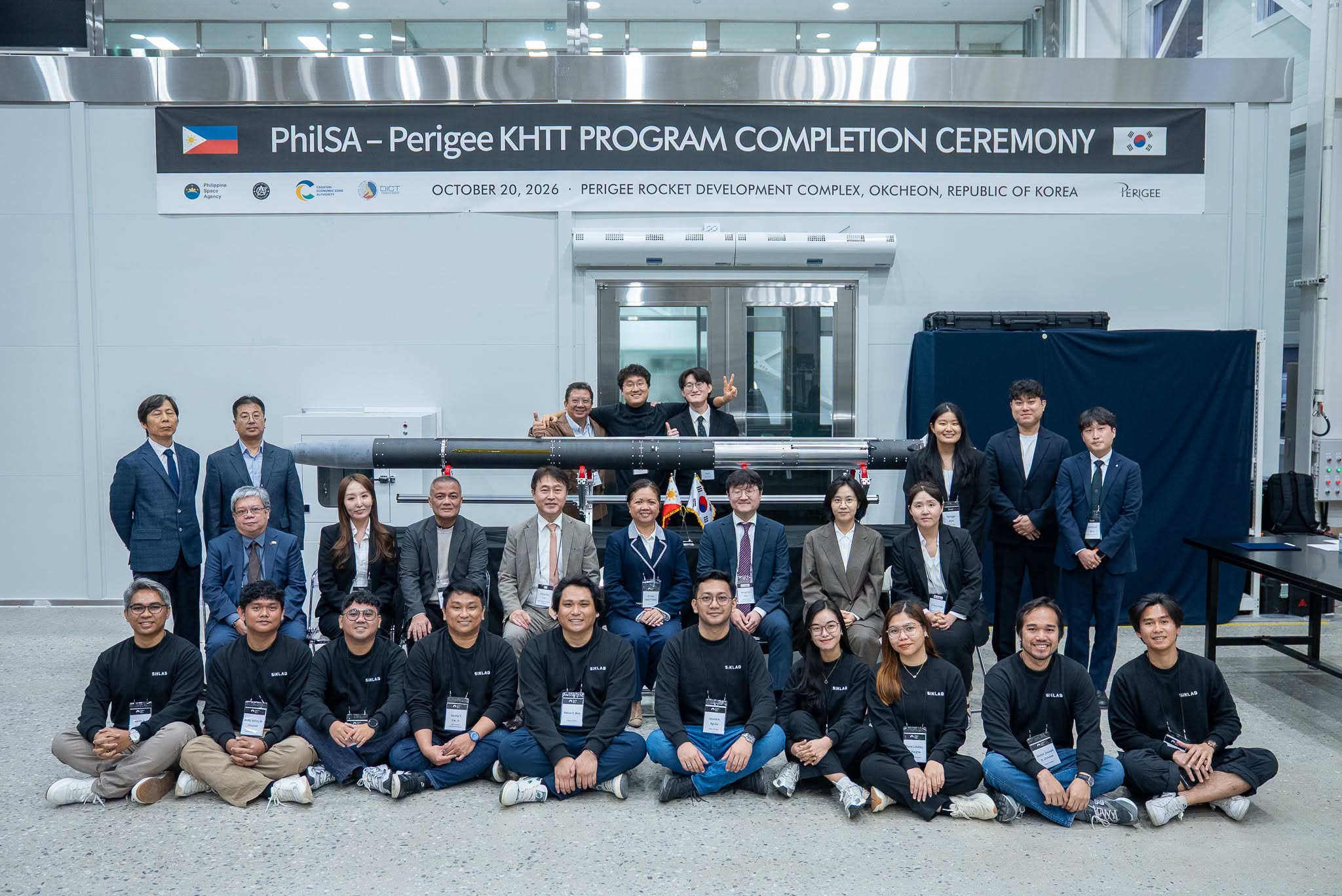
MANILA, Philippines – Nakumpleto na ng 10 engineer mula sa Philippine Space Agency (PhilSA) ang hands-on rocket training sa South Korea bago ang planong demonstration launch ng bansa sa 2027.
Sa pahayag nitong Miyerkules, Nobyembre 4, sinabi ng PhilSA na ang mga engineer ay sumailalim sa training sa assembly, integration, at testing ng liquid-fueled sounding rocket sa ilalim ng SIKLAB: Building Industrial Space Launch Systems Project.
“The completion ceremony was held on 20 October 2026 in Okcheon, South Korea—highlighting the Philippines’ progress in developing domestic launch capabilities,” sinabi ng PhilSA.
“Following this, the sounding rocket and ground support equipment will be shipped to the Philippines for final assembly and tests in Cagayan, with the demonstration launch targeted for early 2027,” dagdag pa nito.
Ang mga engineer ng PhilSA ay sinanay sa Rocket Development Complex of Perigee Aerospace Inc., kung saan isinagawa nila ang buong development cycle ng Blue Whale 0.1 (BW0.1) sounding rocket ng kompanya.
Nagsagawa rin ang mga ito ng system-level verification procedures kabilang ang Dry Run, Wet Dress Rehearsal, at Static Fire Test.
Ayon sa PhilSA, ang training ay bubuo sa unang phase na isinagawa noong 2025 na nakatutok sa rocket theory at pagbuo ng individual rocket components.
Target ng PhilSA ang demonstration launch sa 2027 gamit ang bersyon nito ng BW0.1, ang unang privately developed liquid-propellant rocket ng South Korea.
Ang rocket ay binuo ng Perigee Aerospace at na-test-launch sa Jeju Island noong 2021.
Ani PhilSA Acting Director General Gay Jane P. Perez, layon ng proyekto na magtatag ng kapabilidad na susuporta sa launch activities sa hinaharap.
“Our goal goes beyond a single launch. We want this undertaking to open doors to succeeding launch activities, attract more commercial interest, and create opportunities for Filipino engineers, researchers, and enterprises to participate in the growing space economy,” aniya.
“We want the knowledge gained here to translate into lasting capabilities and contribute to the development of our space industry,” dagdag pa. RNT/JGC