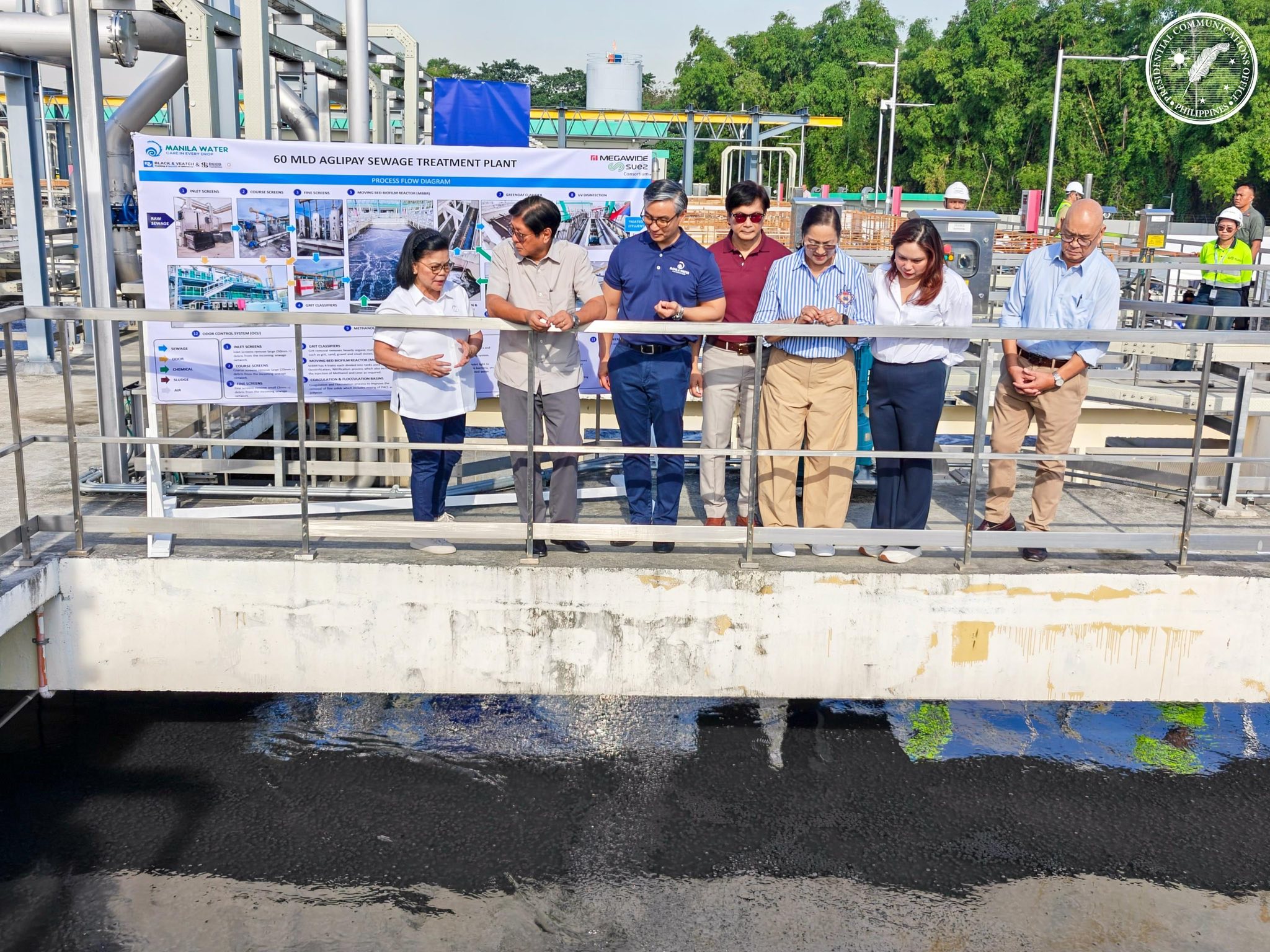
MANILA, Philippines – SINABI ni Pangulong Ferdinand Marcos Jr. na halos 80% ng mga households o sambahayan sa Metro Manila at kalapit-lalawigan ay magiging konektado na sa sewerage systems sa 2047, pagtiyak sa wastong wastewater management.
Inihayag ito ng Pangulo sa inagurasyon ng Aglipay Sewage Treatment Plant (STP) sa Mandaluyong City, na nakatakdang maging isang pinakamalaki sa Manila Water at pinaka-advanced na mga pasilidad hanggang sa ngayon.
“Guided by the Revised Concession Agreement under Republic Act Nos. 11600 and 11601, our goal is this: by 2047, 76 percent of households in Metro Manila, in Cavite, and Rizal will be connected to sewerage systems, while the remaining 24 percent will be covered by proper sanitation services. This means that no community is left without safe and responsible wastewater management,” ang sinabi ng Pangulo sa kanyang talumpati.
“Clean facilities must be matched by clean habits. Proper wastewater systems must be complemented by responsible waste disposal. So, I call on everyone — the government, private sector, and the citizens alike: Let us all do our part. Protect our waterways. Keep our surroundings clean and healthy,” ang winika pa rin ng Pangulo.
Ang P3.93-billion Aglipay STP ay nagsisilbing 2,115-hectare catchment area sa mga lugar ng Mandaluyong City, San Juan City, at Quezon City, at mapakikinabangan ng 650,000 residente.
Dinibelop ito ng Manila Water sa pakikipag-ugnayan sa Metropolitan Waterworks and Sewerage System.
“By reducing pollution flowing into rivers within its service area, this facility will improve local water quality. It also supports the long-term rehabilitation of Manila Bay by limiting the pollution load that eventually reaches our seas,” ayon sa Pangulo.
“The facility has the capacity to treat 60 million liters of wastewater daily, with provisions to expand to 120 million liters per day,” dagdag na pahayag ng Chief Executive.
Gumagamit ito ng Moving Bed Biofilm Reactor technology para tiyakin ang episyenteng biological treatment sa ilalim ng pabago-bagong ‘flow conditions,’ sa gayon mabawasan ang pagpasok sa mga kalapit na daluyan ng tubig. Kris Jose